AI
US AI Policy Embraces Open-Weight Models, Says Top Science Adviser
OSTP Director Michael Kratsios says open-weight models put American AI innovation directly in the hands of developers, researchers, and startups.
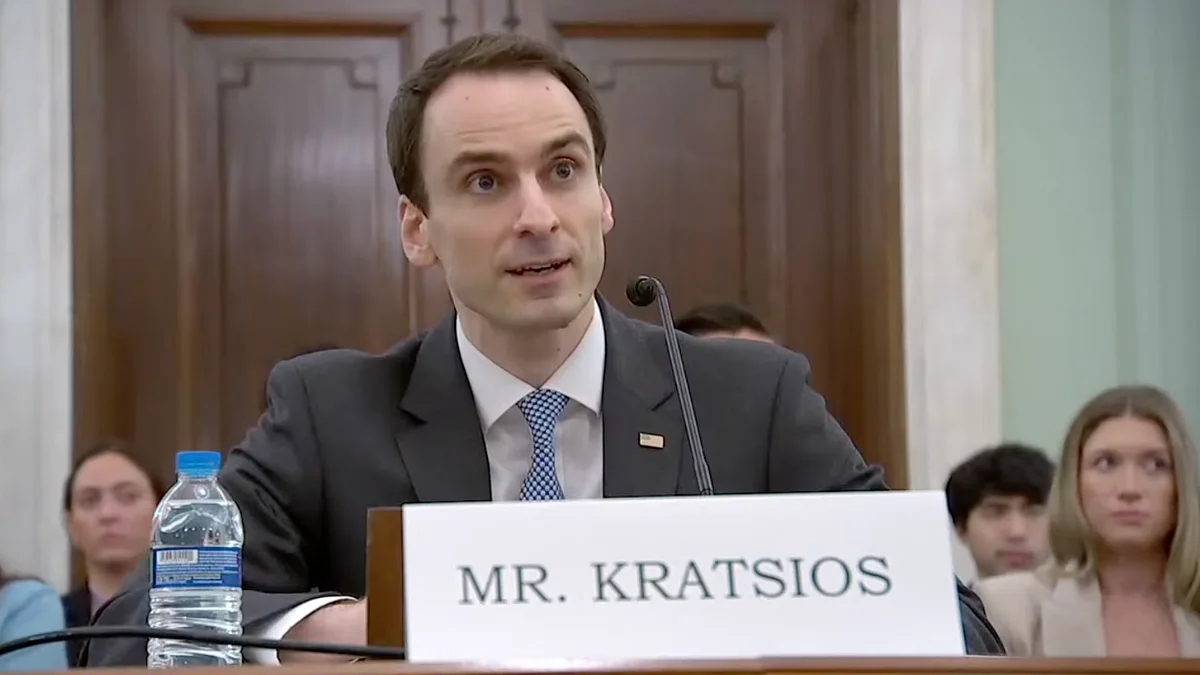
In an official statement posted on X on Wednesday, August 12, 2026, Michael Kratsios, director of the White House Office of Science and Technology Policy (OSTP), said that open weight models place American AI innovation directly in the hands of developers, researchers, and startups. He added that this represents the kind of leadership called for by the President's AI Action Plan, and that the administration welcomes laboratories across the U.S. ecosystem that continue to invest in open and accessible AI. Kratsios's remarks come amid a heated policy debate over the role of open weight models in sustaining American AI leadership.
Earlier, on July 25, 2026, several major technology companies, including Nvidia, Microsoft, and Meta, signed an open letter titled "Open Weights and American AI Leadership." Notably, OpenAI did not sign the letter, a fact that drew attention because the company is known for developing closed AI models. The open letter, published by Microsoft, asserts that open weight AI can expand access, strengthen competition, improve security, and help maintain American AI leadership. The document is also part of a broader push to make open weight an explicit part of U.S. technology policy. Kratsios's comments also reference the AI Action Plan issued by the White House in July 2025.
The document, titled "America's AI Action Plan," serves as a policy framework directing federal agencies to accelerate AI development and adoption, including through support for open models. Although specific details about open weight were not explicitly mentioned in the public summary, Kratsios's statement indicates that open models are now part of the administration's official strategy. Brookings, in an article by John Villasenor, explains that open weight models are AI models whose weights are publicly accessible, allowing developers to download, modify, and run them locally. Villasenor emphasizes that banning Chinese made open weight models would be a mistake, as those models also contribute to the global innovation ecosystem. This view reinforces the argument that open weight is not just about access but also about America's strategic position in global technology competition.
From an industry perspective, the decision by Nvidia, Microsoft, and Meta to sign the support letter shows a consensus among major players that open weight is the future of AI distribution. Meanwhile, OpenAI's absence from the signatories signals that not all U.S. AI labs agree with the open approach. This divergence reflects a deeper debate between closed business models that rely on paid APIs and open models that depend on widespread adoption and developer ecosystems. Analysts at aitechmodel.com, in an article dated August 8, 2026, noted that a fundamental shift is occurring as open weight becomes an explicit part of U.S. technology policy, while American labs release advanced models that can run locally.
According to that analysis, AI leadership is no longer determined solely by who operates the largest models, but also by who can distribute useful models. This shift has significant implications for startups and researchers who have relied on API access from major providers. For developers and startups, open weight models allow them to build applications without paying per use API fees or being tied to specific cloud infrastructure. This lowers barriers to entry and accelerates experimentation. However, open models also bring security challenges, as model weights can be misused for harmful purposes. Microsoft, in its letter, acknowledges that open weight can improve security by enabling public audits, but still requires careful governance frameworks.
Kratsios's comments also affirm that the U.S. government sees open weight as a tool to maintain leadership amid competition with China. By allowing innovation to spread to many hands, the U.S. hopes to accelerate the cycle of discovery and retain a competitive edge. This aligns with the spirit of the AI Action Plan, which emphasizes the importance of a strong research ecosystem and collaboration between government, industry, and academia. Nevertheless, no further details have been provided regarding concrete steps the government will take to support open weight. Kratsios's statement remains declarative, and policy implementation will need to be observed in the coming months.
What is clear is that the signal from the White House and the support from major companies like Microsoft, Nvidia, and Meta indicate that open weight has become an official agenda, not just community discourse. Going forward, attention will focus on how OpenAI and other labs that did not sign the letter respond. If the open weight trend continues to strengthen, closed AI business models may need to adapt. However, the final decision remains with each company, and the government has so far only provided encouragement, not mandates. For the global AI ecosystem, Kratsios's statement underscores that the U.S. aims to lead not only in model development but also in the distribution of access.
This is a paradigm shift that will affect how AI is developed, used, and regulated in the years to come.