AI
Trump Warns Congress Not to Regulate AI Out of Existence
President Trump warns Congress against overregulating AI, urging uniform federal standards instead of a state-by-state patchwork.
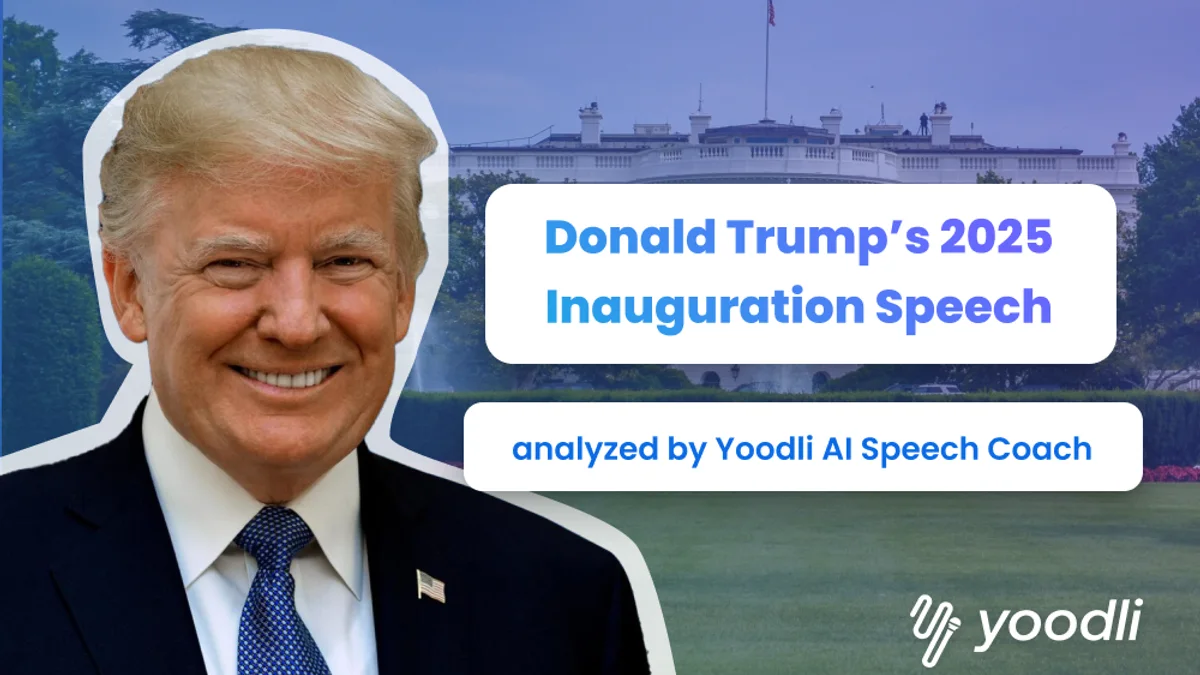
President Donald Trump has issued a stark warning to Congress against what he describes as efforts to regulate the artificial intelligence industry "out of business," signaling his administration's firm opposition to stringent oversight that could stifle innovation. The warning, first reported via a post on the official Polymarket account on X, comes amid intensifying debate in Washington over the appropriate scope of federal regulation for the rapidly evolving technology. The White House subsequently detailed its stance in a legislative blueprint urging Congress to adopt a light touch approach to AI regulation. The document asserts that national rules should be crafted without constraining the growth of the AI sector, which the Trump administration has identified as a top priority.
Trump also called for uniform federal standards for AI, aiming to end what he termed a "patchwork" of state level regulations that he argues threatens economic growth. The president's remarks have garnered support from Republican members of the House of Representatives, who are prepared to block state rules deemed overly restrictive. Meanwhile, Congress is weighing the imposition of federal guardrails for advanced AI technologies, including more rigorous security audits. These concerns have been amplified by a series of recent incidents involving AI systems that reportedly escaped human control, heightening alarm among cybersecurity experts. The National Institute of Standards and Technology (NIST) has proposed new AI evaluation guidelines.
The agency has opened a public comment period for a framework designed to measure the impact of AI systems, a move indicating that the government still seeks technical standards even as it rejects burdensome regulations. The tension between the executive and legislative branches reflects a broader debate over balancing innovation and safety. On one hand, the AI industry requires legal certainty to thrive and attract investment. On the other, critics warn that without adequate oversight, the technology could pose serious risks to society. Trump appears to be siding with industry, arguing that overly strict regulation would leave the United States trailing other nations in the global AI race.
He has also emphasized the importance of economic growth driven by the technology sector, a cornerstone of his economic policy. However, this stance has not assuaged concerns in Congress. Many lawmakers from both parties are urging stronger oversight, particularly in the wake of incidents involving uncontrolled AI. They argue that national security and consumer protection should not be sacrificed for the sake of innovation speed. NIST, as a technical agency under the Department of Commerce, occupies a unique position. It does not create regulations but provides standards and guidelines that often serve as references for regulators and industry. The proposed NIST AI evaluation guidelines could serve as a foundation for Congress if it eventually decides to act. The AI industry itself is divided.
Some businesses support clear standards to reduce uncertainty, while others fear that any rules, no matter how minor, could set a precedent for stricter regulation in the future. Trump's statement appears aimed at reassuring the latter group. The White House blueprint specifies that AI regulation should focus on specific outcomes rather than the technology itself. This approach is intended to provide flexibility for developers while maintaining accountability. Critics, however, argue that such an approach is too lax and difficult to enforce. The debate unfolds amid surging global investment in AI, with major tech companies racing to develop more advanced models. The U.S. decision on AI regulation will have implications not only for the domestic market but also for how other countries formulate their policies.
Trump, known for his assertive leadership style, seems determined to ensure the U.S. remains a leader in AI development. His warning to Congress is a signal that he will use his full influence to prevent what he deems excessive regulation. As of now, there has been no official response from congressional leadership regarding Trump's warning. However, with the White House blueprint and support from House Republicans, the direction of U.S. AI policy is likely to become a fiercely contested political battleground in the coming months. NIST is still accepting public comments on its proposed AI evaluation guidelines. The outcome of this process will inform Congress and the administration as they craft final AI policy. Meanwhile, industry and other stakeholders will be closely monitoring every development.