AI
LeCun Says Inference-Time Optimization Is Core to Energy-Based AI
Yann LeCun says inference-time optimization is foundational for Energy-Based Models and Objective-Driven AI, using gradient optimization for continuous variables.
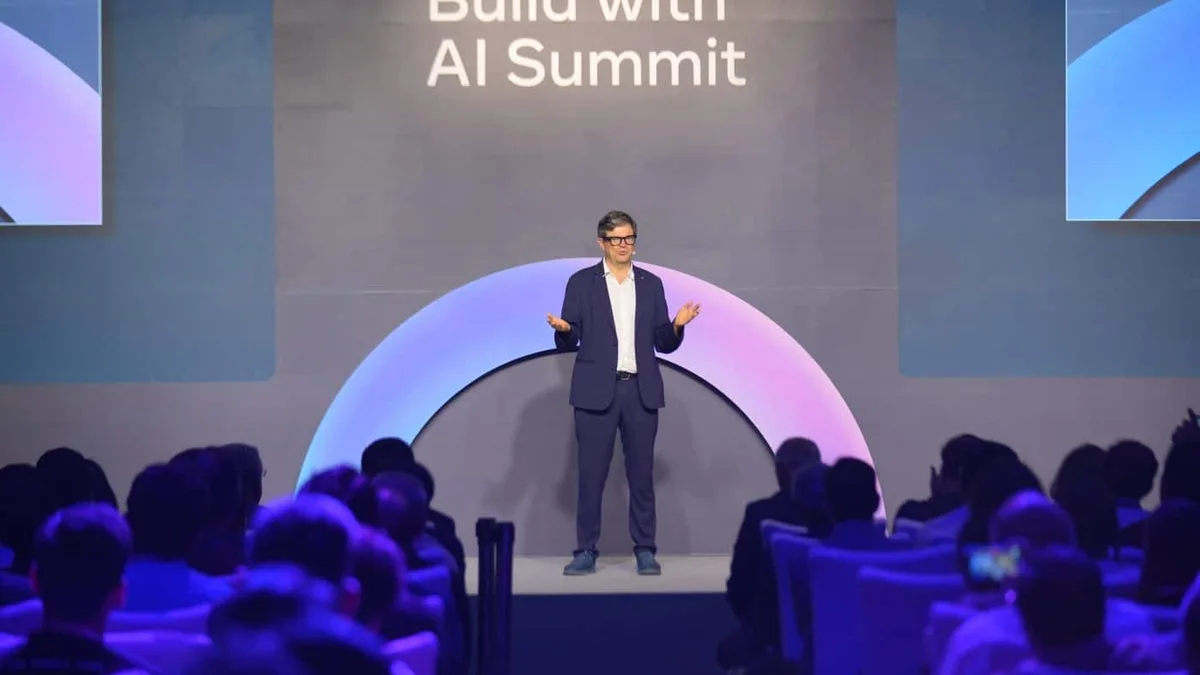
Yann LeCun, Meta's chief AI scientist, has reaffirmed that using optimization at inference time is a foundational concept for Energy Based Models (EBMs) and the Objective Driven AI (ODAI) architecture. In a post on his personal X account, @ylecun, responding to a discussion on computational approaches for next generation AI models, LeCun explained that when the variables to be inferred are continuous, the most sensible approach is gradient based optimization. He also noted that a good example of ODAI is a world model based system that leverages gradient optimization for planning. The statement underscores the direction LeCun has long championed: moving away from purely autoregressive paradigms toward systems capable of planning and reasoning. Energy Based Models are not new in AI literature.
An EBM is a framework that learns an energy function mapping configurations of variables to scalar values, where lower energy indicates a more desirable configuration. During inference, the model searches for the configuration with minimum energy, and this search is performed through optimization. This approach differs from other generative models that produce output in a single forward pass. Recent developments show that inference time computation, often analogized to System 2 thinking in humans, is gaining popularity for improving model performance. A research paper titled "Energy Based Transformers are Scalable Learners and Thinkers," published on arXiv, discusses efforts to make this approach more general.
The paper highlights limitations of current inference approaches, such as those that work only on specific modalities, only on verifiable domains like mathematics and programming, or that require additional training of verifiers or verifiable rewards. LeCun has consistently promoted architectures that enable planning and reasoning through optimization, rather than merely predicting the next token. His vision of objective driven AI places optimization as the core mechanism for achieving specific goals in complex environments. The world model based systems he refers to have an internal representation of how the world works, allowing them to simulate possible actions before making decisions. This approach has significant implications for the development of next generation AI.
Instead of relying solely on scale of data and parameters, ODAI systems emphasize the ability to think and plan. This aligns with research trends seeking to make AI models more computationally efficient by performing additional computation only when needed, rather than always generating output in a single pass. On the other hand, energy efficiency during inference is a growing concern in the industry. A proposal in the OpenAI community forum outlines an energy constrained optimization framework for inference models, aiming to minimize energy consumption while maintaining inference quality. The framework integrates multi objective optimization, structural pruning, quantization, knowledge distillation, and information theoretic metrics, applicable to transformer based architectures and large language models (LLMs).
This context is relevant because as AI models grow larger, energy use during inference becomes a major bottleneck. Beyond hardware improvements, algorithmic approaches like the one proposed are crucial for sustaining AI development. LeCun's remarks on inference time optimization touch on the intersection of computational efficiency and deeper reasoning capabilities. LeCun did not mention implementation timelines or specific products in his post. His statement is more conceptual, reaffirming the research direction he believes will shape future AI architectures. However, his position as a key figure at Meta AI means industry observers view his comments as a signal of technological direction at one of the world's largest AI companies. The discussion of EBMs and ODAI comes amid broader debates about the limitations of autoregressive large language models.
Critics, including LeCun, argue that next token prediction has fundamental limits in reasoning and planning. Inference time optimization is seen as one way to overcome these limitations, allowing models to "think" longer before producing an answer. The next development to watch is whether this approach will be widely adopted in industry, given that additional computation during inference could have economic implications. The balance between output quality and cost efficiency will determine how quickly this paradigm gains acceptance beyond research settings. LeCun's advocacy for inference time optimization is part of a larger push toward AI systems that can reason and plan, rather than simply generate text. His comments have sparked discussions among researchers and practitioners about the future of AI architecture.
While some remain skeptical about the practicality of optimization based inference due to computational costs, others see it as a necessary evolution for achieving more intelligent and efficient AI. As the field progresses, the integration of energy based principles and objective driven design may become increasingly important in addressing the challenges of scalability and sustainability in AI development.