Startup
CXMT Raises $9.8 Billion in Shanghai IPO, Market Cap Could Surge
CXMT raised $9.8 billion in a hugely oversubscribed Shanghai IPO, set to debut with an initial market cap of about $85 billion.
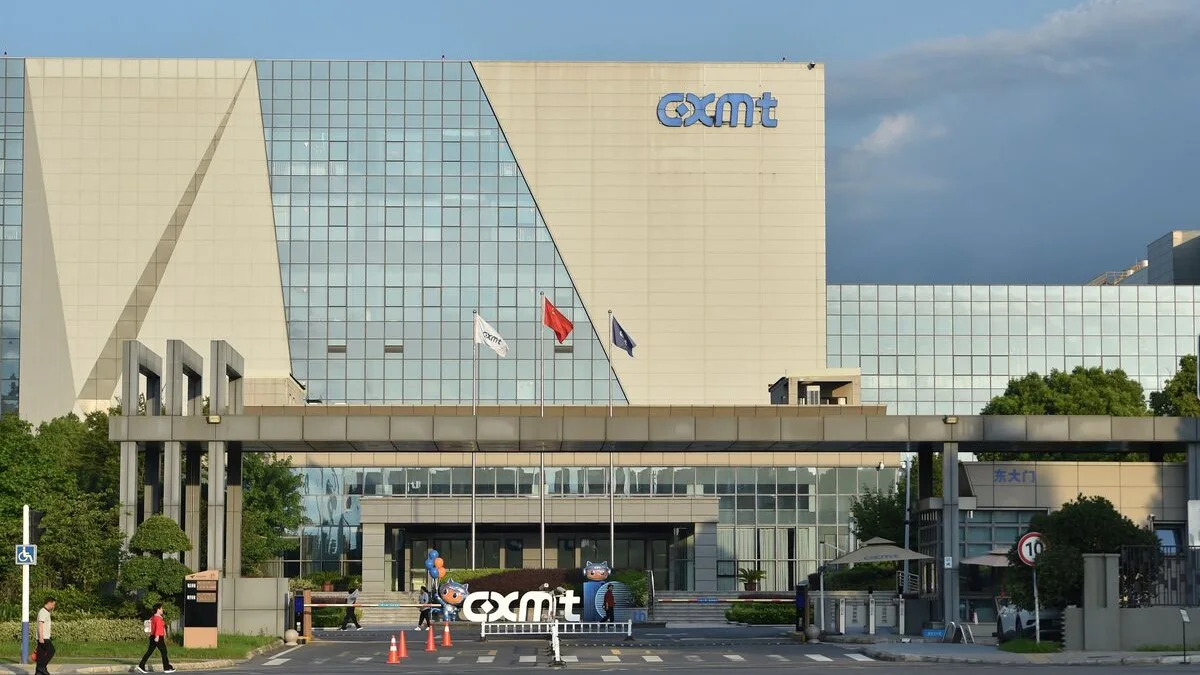
CXMT Corp., a Chinese memory chip manufacturer based in Hefei, has raised $9.8 billion (approximately 57.92 billion yuan) in its initial public offering on the Shanghai Stock Exchange, pricing shares at 8.66 yuan each. The IPO is one of the largest in China in recent years, particularly in the semiconductor sector. According to Bloomberg, the offering was hugely oversubscribed, reflecting strong investor optimism about China's memory chip industry, which has long been dominated by global players such as Samsung, SK Hynix, and Micron. CXMT is a leading domestic DRAM producer in China, and its successful listing is seen as a strong signal of Beijing's ambition to achieve semiconductor self sufficiency.
The company is expected to use the proceeds primarily to expand production capacity and develop more advanced process technologies. CXMT has drawn attention for its ability to produce DRAM chips, which are critical components in smartphones, servers, and electric vehicles. The IPO comes amid ongoing US China geopolitical tensions that have disrupted global semiconductor supply chains. A significant first day pop is anticipated. Bloomberg reported that CXMT's current estimated market capitalization of about $85 billion could multiply several times once trading begins. If realized, CXMT would become one of the world's most valuable semiconductor companies, surpassing many competitors in valuation. CNBC reported on July 27, 2026, that CXMT shares surged as much as 500% on their first day of trading in Shanghai.
This surge dramatically inflated CXMT's market capitalization, reflecting investor euphoria over the company's prospects amid Beijing's push to strengthen the domestic chip industry. The 500% gain is among the highest in Chinese IPO history, underscoring strong demand for technology stocks, particularly semiconductors. CXMT's success is underpinned by Chinese government policies promoting import substitution and domestic technology development. Since the US imposed export sanctions on Chinese semiconductor firms, Beijing has aggressively allocated funds and resources to build a self reliant chip ecosystem. CXMT has been a major beneficiary, with access to state funding and partnerships with research institutions. However, challenges remain. The global memory industry is highly competitive and capital intensive.
CXMT must compete with South Korean and US giants that have decades of experience and more advanced process technologies. While the successful IPO provides substantial capital, CXMT still needs to prove its ability to mass produce chips with high yields and competitive costs. Analysts also highlight geopolitical risks that could affect CXMT's access to advanced manufacturing equipment from abroad. On the market side, CXMT's IPO success has boosted sentiment for China's technology sector. Other semiconductor startups may be encouraged to list, capitalizing on high investor interest. However, extreme valuation surges raise concerns about a potential bubble, especially if business fundamentals do not match market expectations. As of this report, CXMT has not issued an official statement detailing its use of IPO proceeds.
However, the company previously indicated it would allocate funds for a new factory in Hefei and next generation DRAM technology development. With $9.8 billion in fresh capital, CXMT has ample resources to accelerate its expansion plans and strengthen its position in the global memory market. Industry participants and investors will closely monitor CXMT's progress, given its strategic role in China's semiconductor supply chain. The success or failure of CXMT's expansion plans could serve as a key indicator for the future of China's chip industry as a whole. CXMT's IPO also highlights the broader trend of Chinese tech companies turning to domestic capital markets amid regulatory and geopolitical uncertainties.
The Shanghai Stock Exchange's STAR Market, where CXMT listed, has become a preferred venue for semiconductor and other high tech firms seeking funding. The strong demand for CXMT shares suggests that investors are betting on China's ability to build a competitive domestic semiconductor industry, despite ongoing challenges. Looking ahead, CXMT faces the task of scaling up production to meet growing demand for DRAM chips, which are used in everything from data centers to consumer electronics. The company's ability to ramp up output and achieve cost parity with established players will be critical. Additionally, CXMT must navigate export controls and technology restrictions that could limit its access to cutting edge equipment and materials.
Despite these hurdles, the IPO's success provides CXMT with a significant financial cushion and a strong signal of market confidence. The company's valuation, if sustained, would place it among the top semiconductor firms globally by market cap, a remarkable achievement for a relatively young player in a capital intensive industry. In summary, CXMT's record breaking IPO underscores the high stakes and intense competition in the global semiconductor industry, as well as China's determination to become a major player. The coming months will reveal whether CXMT can translate its financial windfall into technological and market leadership.