AI
Cisco's AI Revenue Forecast Falls Short of Investor Expectations
Cisco projects $7.5 billion in AI sales this fiscal year, below its $9.3 billion in AI orders, sending shares lower.
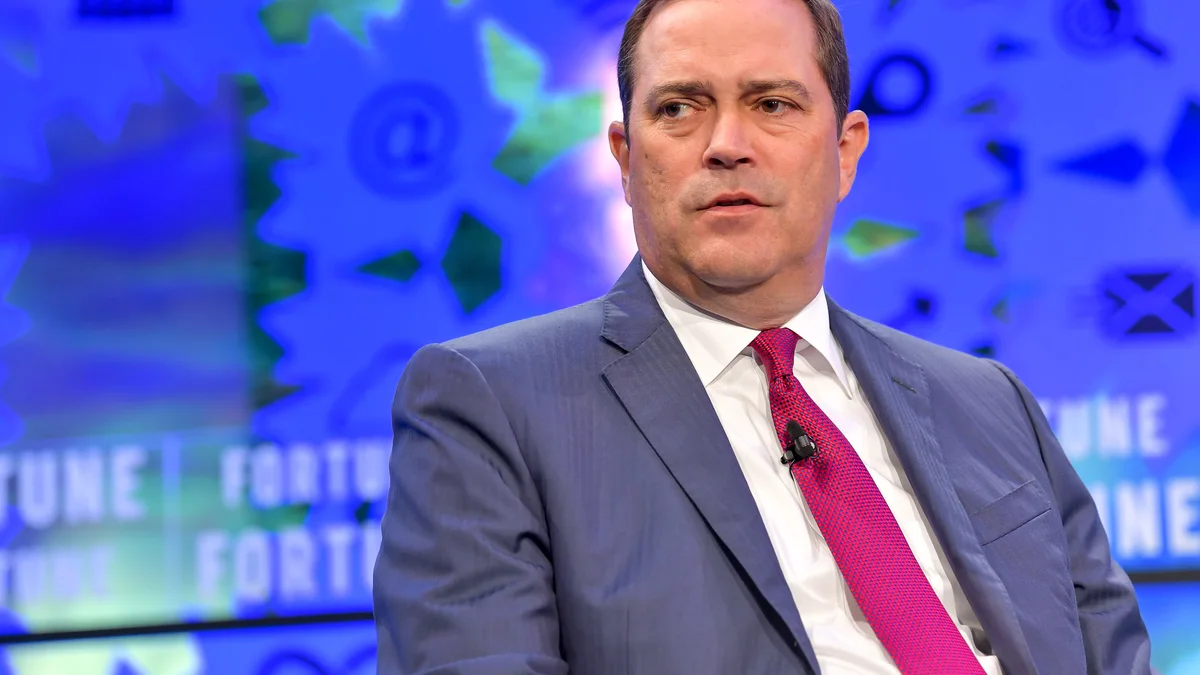
Cisco Systems Inc. projected $7.5 billion in sales tied to the artificial intelligence data center boom for its current fiscal year, a figure that disappointed investors who had watched the world's largest networking equipment maker accumulate $9.3 billion in AI related orders over the past year. The projection came alongside a quarterly report that beat analyst estimates but fell short of elevated Wall Street expectations. According to Bloomberg Technology, Cisco beat sales projections, citing broad based record demand. However, the market reaction was negative. Cisco shares reportedly fell in after hours trading despite the company posting revenue and profit that exceeded estimates. CNBC reported that while Cisco's quarterly results beat estimates, the numbers were not good enough to satisfy Wall Street.
The gap between the $9.3 billion in accumulated AI orders and the $7.5 billion AI sales projection is at the heart of investor disappointment. The order figure reflects customer commitments already booked, while the sales projection indicates how much will be recognized as revenue in the current fiscal year. The difference suggests that some new orders will be realized beyond the current fiscal period, a detail that appears out of step with market hopes for more aggressive monetization. SiliconANGLE reported that AI infrastructure spending drove Cisco's revenue and profit, but its shares still declined after hours. This shows that strong business fundamentals do not necessarily translate into share price appreciation when investor expectations are already very high.
The market appeared to expect a figure larger than $7.5 billion given the magnitude of previously announced order backlogs. Cisco has long been known as a supplier of traditional networking equipment, including switches and routers that form the backbone of corporate data communications. In recent years, the company has sought to position itself as a key player in AI data center infrastructure, competing with other networking equipment suppliers and semiconductor companies targeting the same market. The record demand Cisco cited encompasses not only traditional networking gear but also solutions more directly tied to AI workloads. The latest quarterly financial report shows that Cisco has successfully capitalized on the ongoing wave of AI infrastructure spending.
Large technology companies and cloud service providers continue to build new data centers specifically designed to handle AI model training and inference, which require very high network bandwidth and low latency. Cisco's position in this ecosystem is considered strategic because its networking equipment is a critical component of modern data center architecture. However, the challenge Cisco faces is translating orders into revenue recognized within a predictable timeframe. The delivery and installation cycle for AI data center networking equipment can take months, and revenue recognition often occurs after equipment is installed and operational. The $7.5 billion projection may reflect these operational realities, but investors accustomed to explosive growth in the AI sector may want faster conversion.
The market's reaction to Cisco's announcement also reflects broader dynamics in the technology sector. Stocks of AI related companies have experienced high volatility as investors try to gauge how large and how fast the AI spending wave will materialize. Companies that beat estimates yet see their shares fall indicate that market expectations have moved beyond short term fundamentals. Competitive context is also relevant. Cisco competes with other networking equipment suppliers such as Arista Networks and Juniper Networks, as well as with major players like Nvidia, which is expanding its networking solutions portfolio. Each company is trying to claim a share of AI infrastructure spending that is expected to reach hundreds of billions of dollars in the coming years.
Cisco's $7.5 billion projection provides insight into the market share the company expects, although some analysts may view the figure as conservative. On the operational side, Cisco has taken various steps to strengthen its position in the AI market. The company has launched new products specifically designed for AI data centers, including high speed switches and networking solutions optimized for distributed workloads. It has also formed partnerships with various cloud providers and AI companies to ensure its equipment becomes standard in next generation infrastructure. Despite the post announcement share decline, Cisco's long term fundamentals remain supported by the ongoing trend of AI infrastructure spending. The record demand the company cited indicates that customers continue to place large orders.
The question now is how quickly those orders can be converted into revenue and whether the $7.5 billion projection will be revised upward during the current fiscal year. Analysts and investors will scrutinize subsequent developments, including whether Cisco raises its guidance in coming quarters as orders are realized. The company's ability to execute on delivery and installation in a timely manner will be a key factor in determining whether this initial projection proves conservative or overly optimistic. For now, the market has delivered its verdict through share price movement, and the message is clear: expectations for Cisco in the AI era are very high.