AI
Chinese Memory Chip Maker CXMT Surges 500 Percent in Shanghai Trading Debut
CXMT, a Chinese memory chip maker, surged 500 percent on its Shanghai debut, becoming the most valuable company in mainland China.
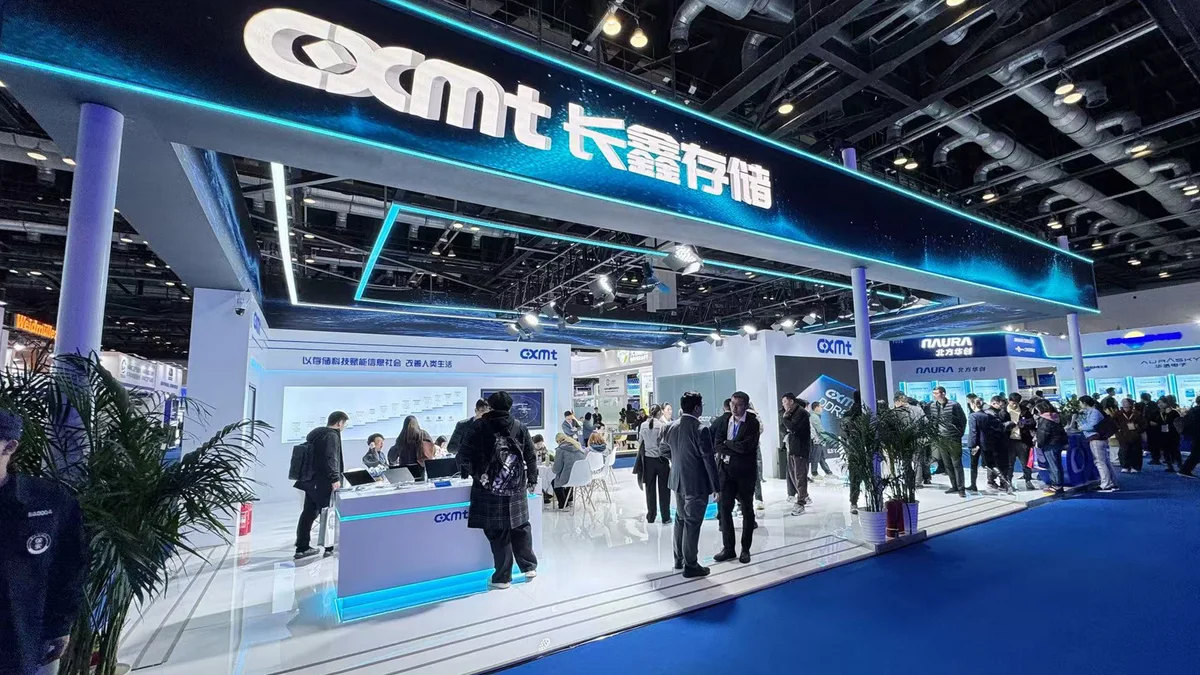
Shares of CXMT, a Chinese memory chip manufacturer, surged more than 500 percent in mid morning trading on its first day on the Shanghai Stock Exchange, pushing its market capitalization to 3.5 trillion yuan (about $520 billion), according to the Economic Times. That valuation surpasses ICBC, China's largest bank, making CXMT the most valuable company in mainland China. The Hefei based company raised 57.92 billion yuan ($8.6 billion) after setting its IPO price at 8.66 yuan per share, CNBC reported. The IPO is the largest in mainland China in recent years, according to the Associated Press. The sharp rise in CXMT's stock price reflects investor enthusiasm for the semiconductor sector, particularly memory chips used in AI data centers.
Global demand for high bandwidth memory (HBM) chips has surged as companies like OpenAI, Google, and Meta develop generative AI models. CXMT is one of the few Chinese memory chip makers capable of mass producing DRAM (Dynamic Random Access Memory). Founded in 2016, the company has received substantial support from the Chinese government as part of efforts to achieve semiconductor self sufficiency. CXMT's successful debut comes amid ongoing geopolitical tensions between the U.S. and China over semiconductors. The U.S. government has imposed a series of export restrictions on advanced chip equipment and technology to China, including AI memory chips, prompting China to accelerate domestic chip industry development. Analysts expect demand for AI memory chips to continue growing in the coming years, driven by AI adoption across various sectors.
CXMT is positioned to benefit from this trend, though it still faces challenges in technology and production scale compared to global players like Samsung, SK Hynix, and Micron. CXMT's market capitalization of $520 billion places it above other Chinese tech giants such as Tencent and Alibaba. However, this high valuation is based on a sharp first day price surge and may not reflect the company's long term fundamentals. CXMT's IPO was one of the most anticipated on the Chinese stock market this year. The company listed on the Shanghai Stock Exchange under the ticker 688981. Shares opened at 43.50 yuan, far above the IPO price of 8.66 yuan. The surge in CXMT's stock also lifted other semiconductor stocks in China.
The Shanghai semiconductor index rose more than 5 percent on the same day, according to market data. Despite the enthusiasm, some analysts warn that CXMT's valuation may be too high. With its price to earnings ratio soaring to unsustainable levels, the risk of a price correction remains. However, investor optimism about the long term prospects of the AI memory chip industry appears to outweigh valuation concerns. CXMT is expected to use the IPO proceeds to expand production capacity and develop next generation memory chip technology. The company also plans to increase its market share in the AI memory chip segment, currently dominated by SK Hynix and Samsung. CXMT's successful debut is also a positive signal for other Chinese chip companies planning to go public.
The Chinese government has encouraged semiconductor firms to seek funding through capital markets to accelerate domestic technology development. With its enormous market capitalization, CXMT has become a key player in the global semiconductor industry. The company will be closely watched by investors and analysts in the coming months, particularly regarding its ability to sustain growth amid intense competition and geopolitical uncertainty. CXMT's IPO proceeds will also be used to ramp up production of HBM chips, which are critical for AI workloads. The company aims to challenge the dominance of South Korean and U.S. memory makers in this high growth segment. However, analysts note that CXMT lags behind in advanced manufacturing processes and may face hurdles in achieving the yields and performance required for cutting edge AI chips.
The Chinese government's push for semiconductor self reliance has provided CXMT with significant financial and policy support. The company has benefited from state backed funds and favorable regulations, which have helped it scale up production rapidly. Yet, export controls imposed by the U.S. and its allies could limit CXMT's access to critical equipment and materials, potentially slowing its technological progress. Despite these challenges, CXMT's IPO success underscores the strong demand for Chinese tech stocks among domestic investors, who are eager to bet on the country's technological ambitions. The company's valuation, while extreme, reflects a premium placed on its strategic importance to China's semiconductor goals. In the near term, CXMT's stock price is likely to remain volatile as investors digest the company's fundamentals and the broader geopolitical landscape.
The company's ability to deliver on its growth plans and navigate trade restrictions will be key to sustaining investor confidence.